
Advocates for Opioid Addiction Treatment

01 Methadone can easily result in overdose.
02 Studies demonstrate methadone prescribed outside of OTPs leads to increased diversion, overdose, and death.

03 Other countries have tried this MOTAA-style approach and regretted it.

04 There is strong opposition among providers and law enforcement.
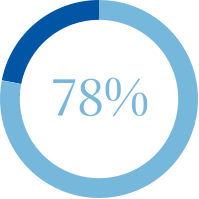


05 MOTAA will not meaningfully expand access.
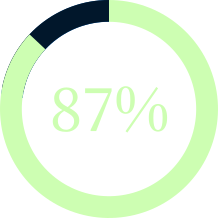
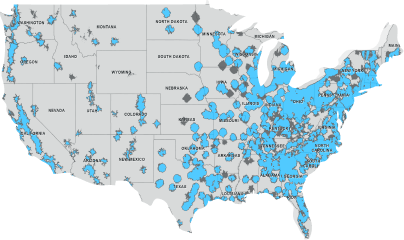
06 MOTAA ignores the critical role that comprehensive care plays in addiction treatment.
07 Through bipartisan legislation and recent SAMHSA-led reforms, progress is already being made to expand access and individualize treatment while maintaining the patient and public safety protections and comprehensive care that have guided methadone treatment for decades.
References
1. Center for Substance Abuse Treatment. (2004). Methadone-associated mortality: Report of anational assessment (SAMHSA Publication No. 04-3904). Substance Abuse and Mental HealthServices Administration. https://atforum.com/documents/CSAT-MAM_Final_rept.pdf
2. National Drug Intelligence Center. (2007). Methadone diversion, abuse, and misuse: Deathsincreasing at alarming rate (Product No. 2007-Q0317-001). U.S. Department of Justice. https://www.justice.gov/archive/ndic/pubs25/25930/index.htm
3. Center for Substance Abuse Treatment. (2007). Summary report of the meeting: Methadonemortality—A reassessment. Substance Abuse and Mental Health Services Administration. https://www.atforum.com/pdf/Methadone_Draft_Report_101807_Brief-w-attch.pdf
4. U.S. Government Accountability Office. (2009). Methadone-associated overdose deaths:Factors contributing to increased deaths and efforts to prevent them (GAO-09-341). https://www.gao.gov/products/gao-09-341
5. Center for Substance Abuse Treatment. (2010). Methadone mortality: A reassessment.Substance Abuse and Mental Health Services Administration. https://cdn.vox-cdn.com/uploads/chorus_asset/file/19541909/Methadone_Mortality_A_2010_Reassessment.0.pdf
6. American Society of Addiction Medicine. (2020). The ASAM national practice guideline for thetreatment of opioid use disorder: 2020 focused update. Journal of Addiction Medicine, 14(2SSuppl 1), 1–91. https://doi.org/10.1097/ADM.0000000000000633
7. Strang, J., Hall, W., Hickman, M., & Bird, S. M. (2010). Impact of supervision of methadoneconsumption on deaths related to methadone overdose (1993–2008): Analyses using OD4 indexin England and Scotland. BMJ, 341, c4851. https://doi.org/10.1136/bmj.c4851
8. Aldabergenov, D., Reynolds, L., Scott, J., Kelleher, M. J., Strang, J., Copeland, C. S., & Kalk, N. J.(2022). Methadone and buprenorphine-related deaths among people prescribed and notprescribed opioid agonist therapy during the COVID-19 pandemic in England. InternationalJournal of Drug Policy, 110, 103877. https://doi.org/10.1016/j.drugpo.2022.103877
9. Tjagvad, C., Skurtveit, S., Linnet, K., Andersen, L. V., Christoffersen, D. J., & Clausen, T. (2016).Methadone-related overdose deaths in a liberal opioid maintenance treatment programme.European Addiction Research, 22(5), 249–258. https://doi.org/10.1159/000446429
10. Fugelstad, A. (2022). What lessons from Sweden’s experience could be applied in the UnitedStates in response to the addiction and overdose crisis? Addiction, 117(5), 1189–1191. https://doi.org/10.1111/add.15847
11. Gauthier, G., Eibl, J. K., & Marsh, D. C. (2018). Improved treatment-retention for patientsreceiving methadone dosing within the clinic providing physician and other health services(onsite) versus dosing at community (offsite) pharmacies. Drug and Alcohol Dependence, 191, 1–5. https://doi.org/10.1016/j.drugalcdep.2018.04.029
12. Sung, M. L., Black, A. C., Blevins, D., Henry, B. F., Cates-Wessel, K., Dawes, M. A., Hagle, H.,Joudrey, P. J., Molfenter, T., Levin, F. R., Fiellin, D. A., & Edelman, E. J. (2025). Clinician andpractice characteristics associated with support of office-based methadone: Findings from anational survey. Journal of Addiction Medicine, 19(2), 150–156. https://doi.org/10.1097/ADM.0000000000001388
13. Orgera, K., & Tolbert, J. (2019, May, 24). The opioid epidemic and Medicaid’s role in facilitatingaccess to treatment. KFF. https://www.kff.org/medicaid/the-opioid-epidemic-and-medicaids-role-in-facilitating-access-to-treatment/
14. Office of Inspector General, U.S. Department of Health and Human Services. (2024). Medicareand Medicaid enrollees in many high-need areas may lack access to medications for opioid usedisorder (OEI-BL-23-00160). https://oig.hhs.gov/documents/evaluation/9999/OEI-BL-23-00160.pdf
15. Substance Abuse and Mental Health Services Administration. (2025). Revised Regulations forOpioid Treatment Programs: Establishing a Baseline to Measure Progress Over Time. U.S.Department of Health and Human Services. https://library.samhsa.gov/sites/default/files/revised-regulations-otp-pep25-02-025.pdf
16. Centers for Disease Control and Prevention, National Center for Health Statistics. (2026).Provisional drug overdose data. https://www.cdc.gov/nchs/nvss/vsrr/drug-overdose-data.htm