OTPs Understand Individualized Care is Key to Successful Treatment
New SAMHSA flexibilities for OTPs have improved access and quality of care for people with OUD. Learn more about how OTP clinicians are individualizing care.


Jodie shares her story of how individualized treatment and counseling helped her
More Flexible OTP Care for Patients with OUD is Saving Lives
In April of 2024, the Substance Abuse and Mental Health Services Administration (SAMHSA) enacted regulatory flexibilities for Opioid Treatment Programs (OTPs) in order to expand access to highly effective, evidence-based services, especially in rural areas and allow treatment to be more patient centered.
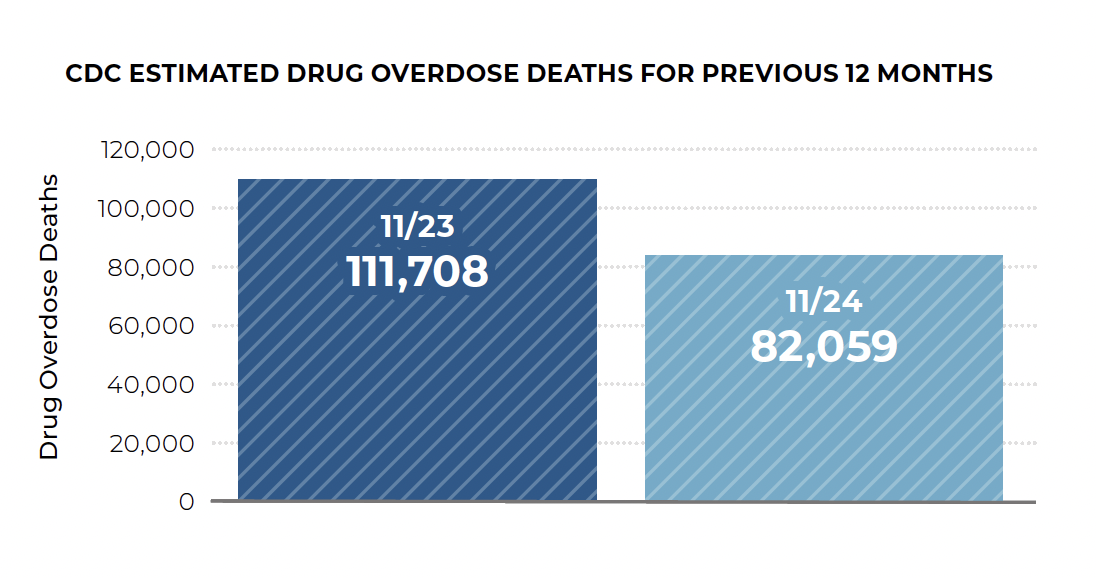
The SAMHSA flexibilities give more authority to OTP clinical experts to individualize treatment in a highly structured context. The implementation of these flexibilities correlates with a dramatic decrease in overdose deaths across the country. For the 12 months ending in November 2024, 6 months after SAMHSA flexibilities were made permanent, CDC estimated overdose deaths declined over 26% compared to the previous year.

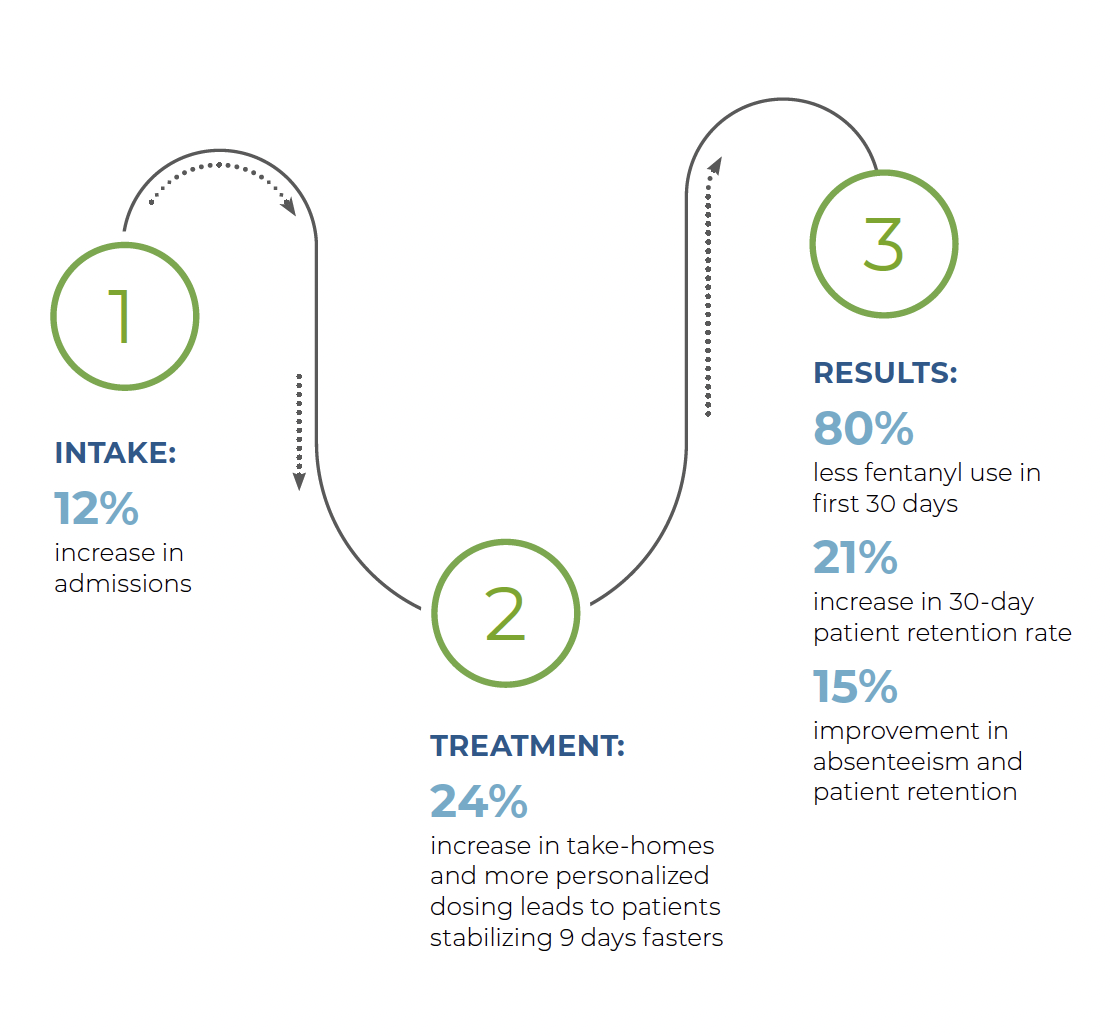
Key SAMHSA Treatment Flexibilities That Save Lives
Methadone Take-Home Doses
OTPs can provide up to 28 methadone take-home doses to patients deemed stable based on clinical assessment.
Telehealth for Initiation
Permit methadone initiation via audio-visual telehealth admission, if deemed appropriate by a licensed OTP practitioner.
Increased First Dose Guidelines
Initial dose of methadone is individually determined by an OTP clinician and can be up to 50 mg, unless medically justified and documented.
Introduction of Mobile Medication Units
Any certified OTP can add a mobile or brick-and-mortar medication unit under its existing registration to reach remote areas.
OUD Treatment Leads to Employment
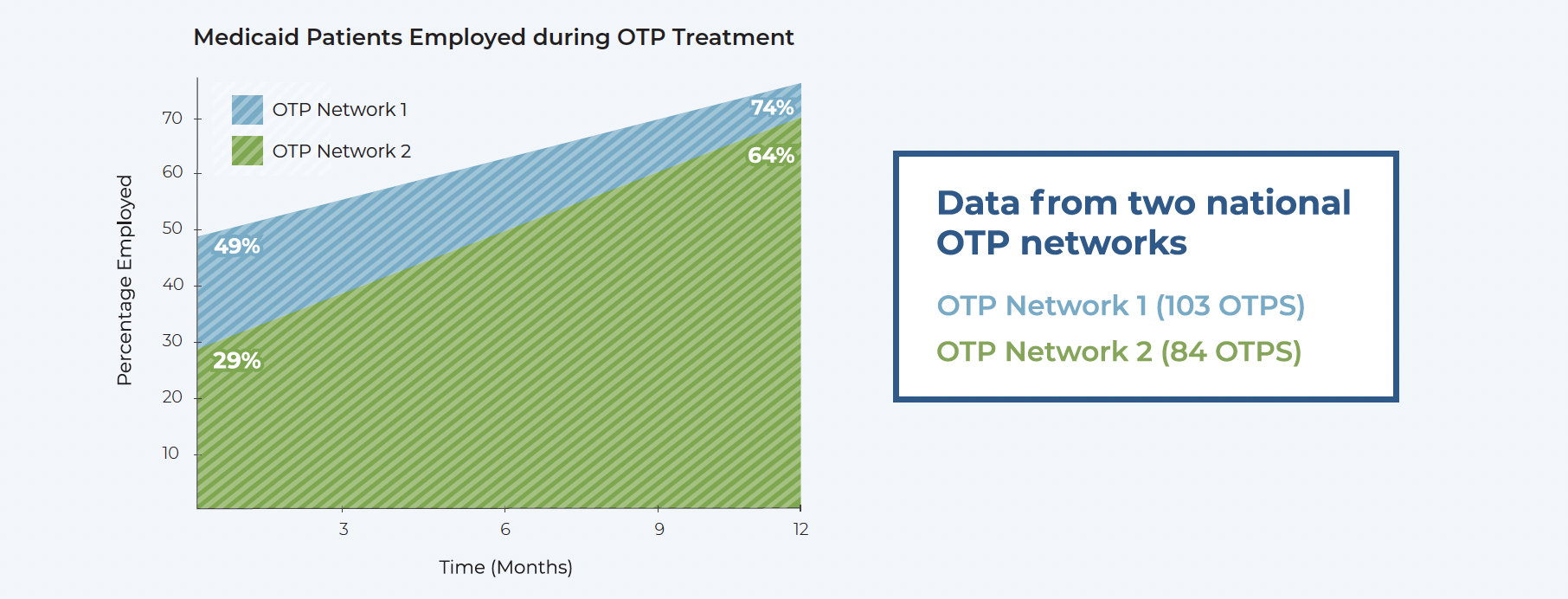
Continuity of treatment reduces overdose risk, improves outcomes, promotes strong communities and families, and increases employment stability, which ultimately reduces long-term Medicaid reliance. Burke, Sullivan, et al (2022) found that individuals receiving MAT had higher employment rates and earnings compared to those not receiving MAT. A representative sample of our members’ data validates that this correlation is unequivocally true for Medicaid patients.